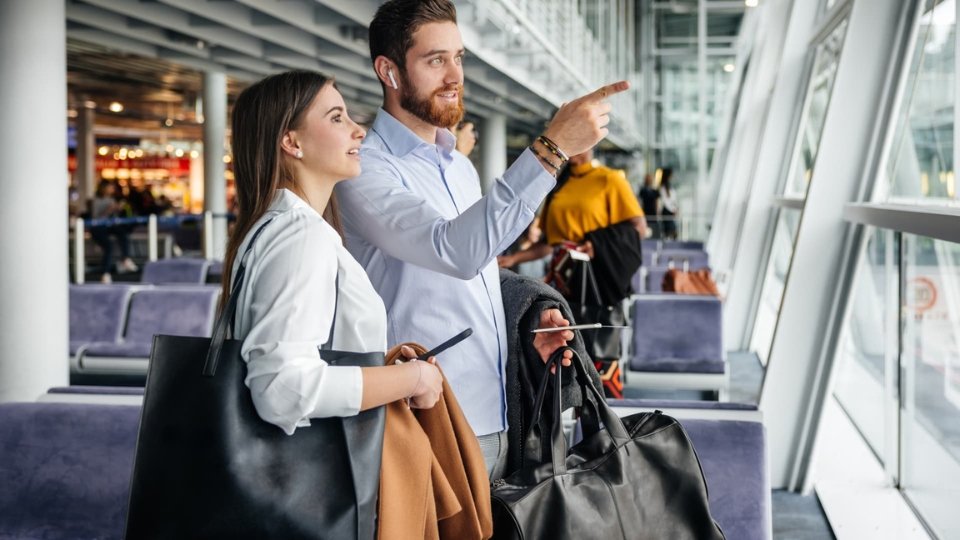
It's no secret that flying often feels less like an exciting journey and more like an endurance test. If you've ever found yourself stewing in a delayed boarding line or desperately tracking a lost bag, you're not alone. Real passenger reviews and common complaints paint a clear, often frustrating, picture: despite a resurgence in travel, customer satisfaction with airlines has plummeted to new lows, even worse than during the pandemic.
Think about that for a moment: the gap between what you expect from an airline and what you actually experience is the widest it is across any industry. A 2017 PwC survey found a negative 33% discrepancy, and recent analyses confirm that gap has only grown. We’re not just talking about minor annoyances; we're talking about fundamental failures that disrupt lives, ruin vacations, and add immense stress to what should be a relatively straightforward process.
At a Glance: What's Driving Passenger Frustration
- Flight Irregularities Reign Supreme: Delays, cancellations, and missed connections are the #1 complaint, accounting for 36% of all negative reviews.
- Luggage Woes Are Soaring: Mishandled bags (lost, damaged, delayed) hit a decade-high in 2022, particularly on international flights.
- Airport Bottlenecks Persist: Long check-in and boarding lines, coupled with inefficient service, remain a major headache.
- The Root Cause: Widespread staff shortages across the industry are fueling these operational breakdowns.
- Consumer Power: Despite the frustration, knowing your rights and taking proactive steps can significantly mitigate travel woes.
- Airline Performance Varies Wildly: Some airlines consistently perform better than others across key metrics.
The Widening Gap: Why Passengers Are More Frustrated Than Ever
For years, the airline industry has struggled to meet passenger expectations, but recent data shows a significant deterioration. TNMT's "Air Travel Pain Point Analysis 2.0," which processed over 15,000 airline reviews from 2020-2023, revealed a stark truth: customer satisfaction has fallen below pandemic lows. This isn't just anecdotal; it's a systemic issue, with customer complaints against U.S. airlines hitting a record 66,675 in 2024 – a 9% increase even as passenger volume only rose by 4%. Prior to 2020, annual complaints rarely topped 20,000, illustrating just how much the experience has soured.
What's going on? It's a perfect storm of factors. During the pandemic, airlines dramatically downsized their workforces. When travel bounced back, rehiring proved difficult due to staff transitioning to other sectors, lengthy security clearances, and extensive training needs. This created an industry-wide labor shortage, from pilots and flight attendants to ground crews and air traffic controllers. The result? A system stretched to its breaking point, where every minor hiccup can quickly cascade into widespread chaos.
The Unholy Trinity of Air Travel Pain
When passengers vent their frustrations, three issues consistently rise to the top, cumulatively accounting for nearly 70% of all negative feedback: flight irregularities, luggage issues, and check-in/boarding challenges.
"Is My Flight Even Going?" - The Scourge of Delays and Cancellations
This is the big one. Flight irregularities – delays, cancellations, and missed connections – are the leading cause of passenger dissatisfaction, accounting for a staggering 36% of all negative reviews, up from 20% in 2019. It's not just about inconvenience; these issues have a profound impact, causing missed meetings, ruined vacations, and significant stress.
Consider these alarming statistics:
- European Delays: In 2022, average departure delays in Europe soared over 50% above the historic average, making it the highest since 2003.
- U.S. Worsening: In 2024, cancellations for the top 10 U.S. airlines rose from 1.28% to 1.36%, while on-time arrivals dropped from 78.3% to 78.1%. That might sound small, but it translated to roughly 1.7 million flights delayed or canceled.
- Seeking Answers: The desperation for real-time information is evident in the surge of Flightradar users, which increased by 200% since Q4 2019, reflecting a critical lack of direct updates from airlines.
Why it matters: When your flight is delayed or canceled, it sets off a chain reaction. You might miss a connecting flight, a crucial business meeting, or precious time with family. The emotional toll of uncertainty, compounded by often uncommunicative airlines, is immense. It's a stark reminder that passengers prioritize reliability and timeliness above almost everything else.
"Where's My Bag?" - The Saga of Lost and Damaged Luggage
There are few sinking feelings quite like watching the baggage carousel spin empty after your flight, realizing your belongings aren't coming. Mishandled baggage rates (lost, damaged, or delayed) reached a decade-high in 2022, with 7.6 bags per 1,000 passengers globally. If you're flying internationally, the odds jump significantly, with a rate of 19.3 per 1,000 – eight times higher than domestic flights.
While the numbers for 2024 showed a slight improvement, 2.7 million bags were still lost or damaged by U.S. airlines. That's 2.7 million stories of ruined trips, lost essentials, and frustrating claims processes.
Your best defense: Savvy travelers are increasingly taking matters into their own hands. Placing tracking devices like Apple AirTags or Tiles in both checked and carry-on luggage has become a popular, almost essential, tactic. This simple step can provide peace of mind and, crucially, hard evidence to help locate your bags if they go astray, often before the airline even realizes they're missing.
"Are We There Yet?" - Check-in and Boarding Bottlenecks
The experience starts long before you even step on the plane. Long queues, inefficient processes, and poor service at check-in and boarding areas are another major source of frustration. These bottlenecks were particularly exacerbated in early 2022 by the surge in travel demand meeting an industry still grappling with labor shortages.
Imagine arriving at the airport hours early, only to spend a significant portion of that time shuffling through a seemingly endless line. This isn't just inconvenient; it builds stress and anxiety before you've even cleared security. The rush to find a seat in an often-overcrowded gate area, or the confusion over boarding groups, further chips away at the passenger experience. It highlights a fundamental need for airlines to streamline their ground operations and ensure adequate staffing for a smoother start to the journey.
Beyond the Big Three: Other Grievances That Grate
While flight irregularities, baggage issues, and airport bottlenecks dominate the complaint landscape, several other significant pain points contribute to passenger dissatisfaction.
Customer Service & Refunds: The Human Touch (or Lack Thereof)
When things go wrong, effective customer service can be the difference between a minor annoyance and a full-blown meltdown. Unfortunately, "customer service" often appears high on the list of complaints. Lengthy wait times for phone support, unhelpful agents, or a lack of clear communication can escalate frustration.
Refunds are a particularly contentious area. Historically, getting your money back for a canceled or significantly delayed flight could be a drawn-out battle. However, new 2024 rules now require airlines to provide automatic refunds for canceled or significantly delayed flights, representing a win for consumers. This change, driven by years of passenger complaints, acknowledges the financial burden and inconvenience these disruptions cause.
Disability Assistance: When Access Becomes an Obstacle
For passengers with disabilities, air travel presents unique challenges, and the airline industry has a mixed record. In 2024, despite a slight improvement, U.S. airlines still mishandled 11,357 wheelchairs and scooters. This isn't just about luggage; it's about mobility, independence, and dignity. A damaged wheelchair can severely impact a passenger's entire trip, or even their life back home.
Airlines need to prioritize the careful handling and timely return of essential mobility aids. This isn't just good customer service; it's a fundamental aspect of accessibility and human rights.
Involuntary Bumping: The Unwanted Upgrade (to a Later Flight)
Overbooking flights is a common airline practice to account for no-shows. When too many passengers show up for an oversold flight, some are "involuntarily bumped" – denied boarding even with a valid ticket. While airlines are required to offer compensation, it's still a frustrating and unexpected disruption.
Data from PIRG shows a wide disparity in how often this occurs. While some airlines, like Allegiant and Delta, managed to bump virtually no one in 2024, others, like Frontier (2.25 per 10,000 passengers) and American (0.67 per 10,000), had significantly higher rates. This highlights that while it can be rare, some airlines are better at managing this potential pain point than others.
Fares & Reservations: The Perils of Pricing and Policies
The complexity of airline fares, hidden fees, and ever-changing reservation policies also contribute to passenger complaints. From unexpected baggage fees to convoluted change policies, the journey of booking a flight can feel like navigating a maze. Transparency and simplicity in pricing and booking are consistently desired by passengers.
The Root Cause: Staffing Shortages and System Strain
Understanding why these pain points are worsening is crucial. The underlying problem for nearly all these issues — from delays and lost bags to long lines and poor customer service — is an industry-wide staff shortage.
Here's the breakdown:
- Pandemic Layoffs: During the pandemic, airlines drastically cut their workforces to survive.
- Rehiring Challenges: When travel rebounded, rehiring proved difficult. Many former employees had moved to other sectors, and new hires faced lengthy security clearance processes and extensive training requirements (e.g., pilots, air traffic controllers, specialized ground staff).
- Exacerbated by Demand: A sudden surge in travel demand in 2022 and 2023 quickly overwhelmed the depleted workforce.
- Visible Impact: The consequences have been highly visible. Remember seeing Qantas executives handling baggage in 2022? Or passengers stranded at Edinburgh Airport due to staff no-shows? These aren't isolated incidents; they're symptoms of a system struggling to keep up.
The lack of sufficient personnel creates a domino effect: fewer ground staff means longer baggage handling times and slower aircraft turnarounds, leading to delays. Fewer customer service agents mean longer wait times for assistance. Fewer air traffic controllers mean fewer flights can be managed efficiently, contributing to air traffic control-related delays. Until these fundamental staffing issues are resolved, passengers will continue to bear the brunt of an overloaded system.
Which Airlines Are the Biggest Culprits (and Which Are Doing Better)?
While the industry as a whole is struggling, some airlines consistently perform better—or worse—than others across key metrics. Knowing this can help you make more informed choices. According to PIRG data for 2024 (looking at complaints per 100,000 passengers, cancellations, delays, mishandled bags, mishandled wheelchairs, and involuntary bumping):
- Overall Complaints (per 100,000 passengers):
- Best: Southwest (1.5), Alaska (2.6), Hawaiian (3.8)
- Worst: Frontier (23.3), Spirit (12.8), JetBlue (10.4)
- Flight Cancellations:
- Best: Southwest (0.83%), Hawaiian (1.05%), Delta (1.09%)
- Worst: Frontier (2.32%), Spirit (1.91%), United (1.74%)
- Delays:
- Best: Hawaiian (16.42%), Delta (17.98%), United (20.86%)
- Worst: Frontier (30.5%), JetBlue (26.94%), Spirit (25.52%)
- Mishandled Bags:
- Best: Allegiant (0.2%), JetBlue (0.35%), Frontier (0.4%)
- Worst: American (0.79%), United (0.66%), Alaska (0.58%)
- Mishandled Wheelchairs:
- Best: Delta (0.63%), Allegiant (0.75%), United (0.97%)
- Worst: Spirit (2.07%), Frontier (1.76%), American (1.63%)
- Involuntary Bumping (per 10,000 passengers):
- Best: Allegiant (0), Delta (0), United (0.03)
- Worst: Frontier (2.25), American (0.67), Spirit (0.48)
Key Takeaway: Frontier Airlines notably had the highest overall complaint rate and the worst records for cancellations, on-time arrivals, and involuntary bumping, in addition to being the second-worst for mishandled wheelchairs. If you're looking for an airline that tends to deliver a more consistent and reliable experience, airlines like Southwest, Hawaiian, and Delta often fare better in critical areas like cancellations and delays. Considering whether a slightly higher fare for a more reliable experience, potentially with perks like those offered by Delta Comfort Plus, is worth it, becomes a real decision point for many travelers.
Your Action Plan: Navigating the Air Travel Minefield
While airlines work to address these systemic issues, you're not powerless. Here's how to take control and minimize your chances of a frustrating travel experience:
Before You Go: Planning for the Unexpected
- Choose Wisely: Check airline performance metrics (like the ones above) before booking, especially if reliability is paramount. Sometimes paying a little more for a carrier with a better on-time record is worth the peace of mind.
- Understand Your Rights: Familiarize yourself with passenger rights regarding delays, cancellations, and lost luggage, both for U.S. domestic and international flights. The U.S. Department of Transportation (DOT) website is a good resource.
- Consider Travel Insurance: For complex trips or those with high stakes, travel insurance can provide a safety net for unexpected disruptions, offering compensation for delays, cancellations, and lost baggage.
- Pack Smart:
- Carry-On Essentials: Always pack medications, important documents, a change of clothes, and valuables in your carry-on, in case your checked bag is delayed.
- Track Your Bags: As mentioned, AirTags or similar tracking devices in both checked and carry-on luggage are highly recommended. They provide invaluable real-time location data.
- Download Airline Apps: Install your airline's app on your phone. These often provide the quickest updates on flight status, gate changes, and sometimes even allow you to rebook directly.
At the Airport: Staying Ahead of the Curve
- Arrive Early: While a universal truth, it's even more critical now. Longer lines at check-in, security, and even passport control mean you need ample buffer time.
- Monitor Flight Status: Continuously check your airline app and airport screens for updates. Don't rely solely on gate announcements.
- Stay Hydrated and Bring Snacks: Delays can be lengthy, and airport food can be expensive or limited. Being prepared makes a difference.
When Things Go Wrong: Advocacy and Action
- Document Everything: Keep all boarding passes, receipts, and communication with the airline. Take photos or videos if issues arise (e.g., damaged luggage).
- Polite Persistence: If a problem arises, approach airline staff calmly but firmly. Have your flight details and a clear request ready. If a ground agent can't help, ask for a supervisor.
- Know the Refund Rules: Remember the new 2024 rules requiring automatic refunds for canceled or significantly delayed flights. If you're eligible, ensure you receive it.
- Contact Customer Service: If you can't resolve an issue in person, use the airline's customer service channels (phone, email, social media). Be clear and concise in your communication.
- File a DOT Complaint: If an airline fails to resolve your complaint, especially concerning passenger rights, file a complaint with the U.S. Department of Transportation. This holds airlines accountable and contributes to data that can lead to policy changes.
Airlines' Flight Path Forward: What Needs to Change
The onus isn't solely on passengers. Airlines have a clear mandate to improve. The TNMT analysis points to two critical areas:
- Prioritize Operational Basics: Passengers fundamentally need reliability and timeliness. Airlines must reinvest in operational efficiency, focusing on minimizing flight irregularities, ensuring proper baggage handling, and streamlining check-in and boarding processes. Reducing just 1% in flight delays can save an estimated €3.5 billion annually, demonstrating the significant financial incentive to get these basics right. This means adequately staffing all areas of operation, from the tarmac to the call center.
- Leverage Startup Innovation: The industry should embrace new technologies. Data analytics and AI can predict and mitigate potential disruptions, optimize staffing, and enhance communication. Investing in innovative solutions can help bridge the gap created by ongoing staff shortages, providing smarter, more efficient ways to manage operations and improve the customer experience.
Taking Control of Your Journey
The current landscape of air travel is undeniably challenging, with real passenger reviews exposing a host of common complaints. From frustrating delays and lost luggage to long lines and inconsistent customer service, the experience often falls short of expectations. However, by understanding these pain points, being proactive in your planning, and knowing your rights, you can significantly mitigate the stress and increase your chances of a smoother journey.
While we await systemic improvements from airlines, empower yourself with knowledge and tools. Your travel plans are too important to leave entirely to chance.